Ecuadorian Markets
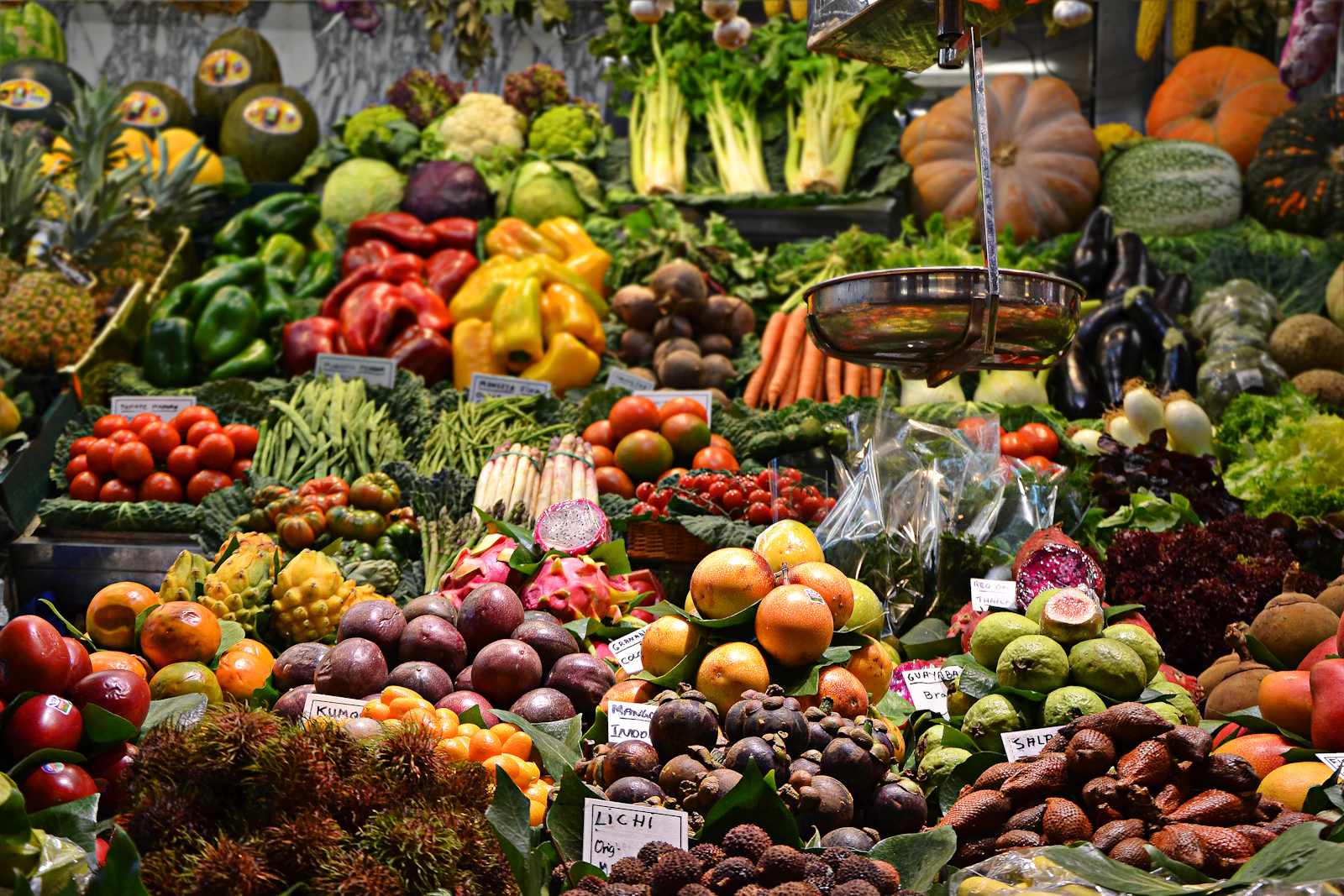
They say that to understand a country you only need to taste its food, but I’ve always believed the truth lies elsewhere: in its markets. It doesn’t matter if you arrive to them looking for lunch or simply wandering, markets always reveal more than you expect. In Ecuador, markets are a living manuscript written by anonymous hands, a testament to the land’s generosity, to people’s perseverance, and to the way history blends with daily life without needing grand declarations. Perhaps that is why I always begin there, in the overlapping voices and impossible colors that only a fertile country can produce.
Along the coast, markets rise almost at the edge of the sea, where fishermen unload the work of dawn with the ease of those carrying out an ancient ritual. The smell of salt is so precise you can guess the time of day from it. Shrimp that look as if they’ve just slipped out of the water, fish still shimmering with traces of the tide, weathered hands that clean, cut, and offer, without exaggeration, a direct piece of the ocean. Eating on the Ecuadorian coast begins here, between melting ice, friendly calls, and the quiet certainty that the immensity of the sea fits into a single stall.
Higher up, in the Andes, markets tell a different truth. Altitude dictates what is grown, preserved, and cooked. Potatoes, grains, herbs, and ají, none of these are mere products. They are the collective response of generations to a landscape that demands respect. The medicinal plants, especially, gathered and sold by the “yuyeras” hold a fundamental place in Andean life. There are herbs to clear energy, soothe the stomach, ease grief, warm the lungs against the cold, or realign what life has disordered. These small living pharmacies mix ancestral knowledge with intuitive botany and a deep trust in nature. One glance at a stall of herbs is enough to understand that Andean cuisine isn’t limited to flavor; it is also a system of health, memory, and quiet resistance.
Further east, in the Amazon, the markets offer yet another form of abundance, one more humid, green, and vibrantly alive. Ingredients come straight from the forest: river fish, roots, aromatic fruits, natural oils, and spices unfamiliar to a first-time visitor. And among them, the chontacuros, presented with pride, roasted or ready to cook, remind us that every culture finds sustenance in its own environment. Amazonian cooking does not need to perform exoticism to impress; it is honest, deeply tied to its territory, and firmly rooted in an ecosystem ruled not by hurry but by ancient natural cycles.
Between all these landscapes, markets in Andean cities like Cuenca become small worlds where everything converges. Their stalls may seem chaotic at first glance, but nothing is truly improvised. The woman who sells herbs knows the health of the city better than anyone. The farmer who arrives from a distant comunidad can tell how much rain fell this week just by looking at his potatoes. The woman grinding maize by hand can predict the festival season before the dates appear on any calendar. They are the keepers of a memory that rarely makes it into books. They feed a country that seldom acknowledges their effort.
Behind every ingredient lies a story almost never told. The campesino who rises before dawn to carry a sack of corn; the farmer who measures time not in hours but in seasons; the hands that sort, wash, transport, and select; the families whose lives depend on a parcel of land they know as intimately as others know a song. When a visitor describes Ecuadorian food as “flavorful,” “unique,” or “surprising,” they rarely imagine the quiet labor behind it. And yet, it is there that the true miracle of gastronomy resides.
Ecuadorian cuisine, like all Latin American cuisines, does not begin in the kitchen. It begins in the earth: in volcanic soil, unexpected rains, tropical humidity, and high-altitude climates that force the body to adapt. It begins with the historic arrival of ingredients that rewrote culinary identity; with the inevitable blending of cultures that met or collided and somehow created something new. It begins with the country’s innate ability to transform what arrives into something of its own, to turn the foreign into the familiar, the imposed into inherited tradition.
Perhaps that is why markets hold such power: because they do not merely sell food, they sell a way of understanding a country. They blur the lines between history, geography, and culture. For travelers, visiting a market is not just a tourist activity; it is an act of comprehension. For locals, it is a reminder of their roots. And for anyone who looks closely, it is a lesson in humility: here, the distance between effort and result does not exist; everything is exposed.
Every time I leave a market, on the coast, in the Andes, in the Amazon, or in Cuenca, I carry the same sensation: that I have witnessed something alive, something beating, something changing without losing itself. That Ecuadorian gastronomy, with all its diversity, strength, and delicacy, is not only meant to be eaten but to be thought about. And that, in the end, we return to markets for the same reason we return to the places that shaped us: to remember that the greatest stories often hide in the ordinary.
Here, between mountains, seas, and forests, markets remain the first and last doorway into the soul of a country. And perhaps that’s why I always come back, because each time I walk through their aisles, I feel I’m coming a little closer to understanding who we are, and why food, more than a flavor, is a way of seeing the world.