The Arithmetic of Water: Cooking at the Edge of Scarcity
When you turn the tap and the flow hesitates, everything changes. Ecuador faces its worst drought in 61 years. For a chef, scarcity is not abstract, it rewrites every technical decision, every sourcing choice, every process. Water teaches what abundance obscures.
By Paola González Obando
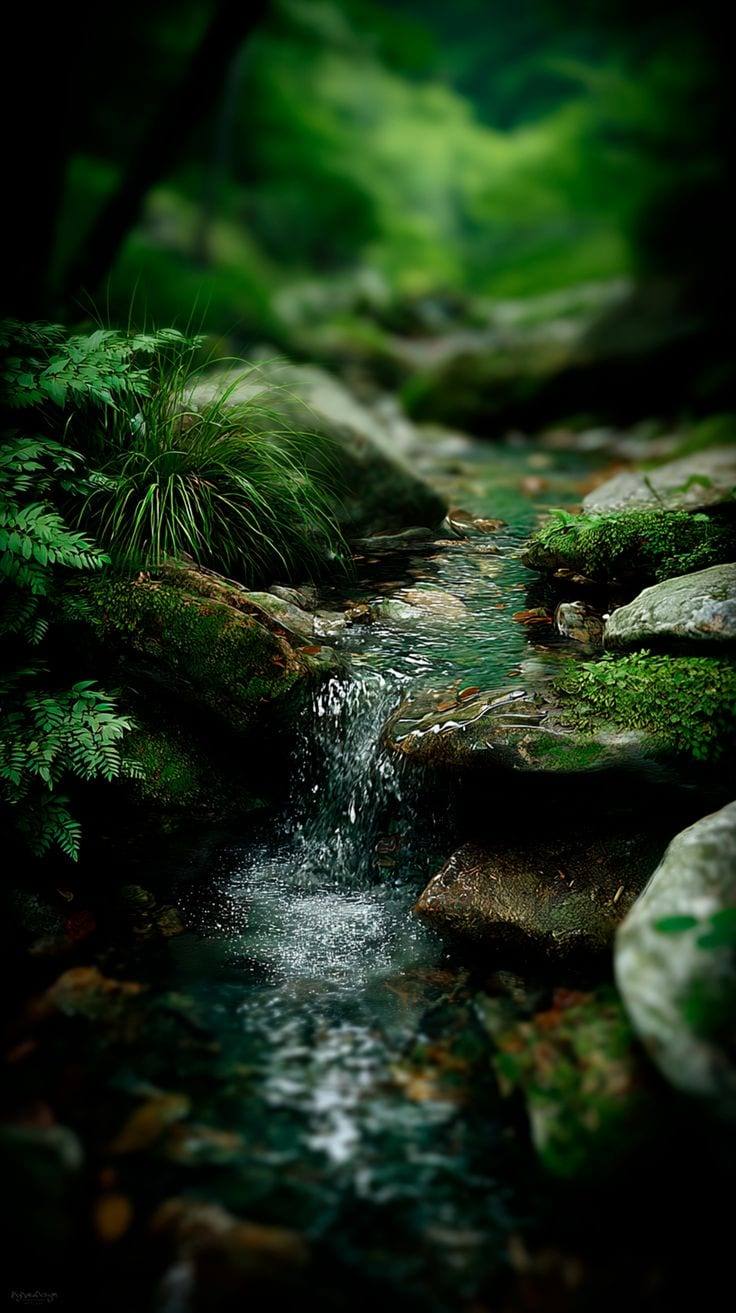
There is a threshold in a kitchen where abundance becomes irrelevant. It arrives quietly, not as a dramatic announcement but as the moment when you turn the tap and the flow hesitates. When it happens, every technical decision you make becomes subordinate to one question: how much water can I afford to use?
I have worked in kitchens across Ecuador’s regions. I have cooked in Guayaquil’s humidity, where water seemed infinite but was already borrowed. I have worked on the coast where salt water pressed against agriculture. Now I work in Cuenca’s high altitude at 2,500 meters where the air is thin and the water, until recently, seemed guaranteed by proximity to the páramo. That assumption has inverted.
The Water We Don’t Calculate
Cooking schools teach knife skills, heat management, flavor development. They do not teach water accounting because, historically, there has been no need. Water was treated like air, present, renewable, infinite enough that measurement seemed pedantic. A chef rinsing vegetables without thinking about flow rate, boiling pasta with an industrial kettle left unattended, cleaning a station at the day’s end with the hose running: these were baseline practices, not extravagances.
The problem is that this invisible accounting obscures what water actually represents in food production. Agriculture accounts for approximately 92% of humanity’s total water footprint. That figure encompasses everything before the food reaches your kitchen, the irrigation of fields, the processing, the transportation through water-intensive supply chains.
But the chef’s relationship to water extends before and after production. Water is both input and waste stream. It is the medium inwhich vegetables are blanched, the steam that cooks grains, the element that hydrates dough. In a functional kitchen, water appears in nearly every process.
When scarcity arrives, every one of these processes must berethought.
The Current Crisis: What Has Changed
Ecuador is experiencing its most severe drought in sixty-one years. This is not a seasonal shortage. The extreme drought has led to forestfires, affected agriculture, the hydroelectric production system, water availability and food sovereignty. The crisis has cascaded beyond urban water supply into agriculture, energy infrastructure, and food security across regions.
The mechanism is worth under standing, because it explainswhy a chef in the mountains faces constraints that seem disconnected fromobvious causes. In Cuenca, water is drawn from the Cajas National Park, amoorland eco system known for its sponge-like ability to capture and release water. The páramo functions as a hydraulic buffer, its vegetation and soilabsorb rainfall and release it gradually, maintaining flows through dryseasons.
But the páramo only works if the system is fed. The combined effects of scarce rainfall and rising temperatures are exacerbating water loss:The lack of rain dries our soils and moors, while high temperatures increase evaporation. This is the mechanics of climate variation becoming climate change. It is not temporary.
The high land agricultural system that supplies regional cities and that I depend on for ingredients has been mapped across studies examining how Ecuador’s high Andean region’s food production systems are increasingly exposed to climate stress. The research identifies crops centralto Andean cooking: potato, corn, tree tomato and documents how precipitation patterns directly influence what can be grown and in what quantity.
The Agricultural Foundation
My access to ingredients depends entirely on regional agriculture, and agriculture in Ecuador’s high lands is experiencing the same constraint I am, but at much greater scale.
Food production systems in Ecuador’s high Andean region are pivotal for food security, rural livelihoods, and agrobiodiversity, but the crops that constitute this system require consistent water access. Highland agriculture relies on a combination of rainfall and irrigation from mountain sources. When both decline simultaneously, yields collapse. This is not theoretical. Farmers supplying local markets have already experienced crop loss.
The effect propagates through my sourcing. Smaller local suppliers have had to reduce what they grow. Certain vegetables that were reliable are now seasonal or unavailable. Prices for available products have increased, reflecting both scarcity and the cost of alternative water access(when available).
This creates a peculiar pressure on a chef: the ingredients that anchor regional cuisine, the crops that have been grown in these high lands for centuries are becoming less reliable. The potato, the corn, the tree tomato, the squashes that form the basis of Ecuadorian ancestral cooking arenow mediated by a resource constraint that previous generations never had tonavigate at this intensity.
The Scale of the Pattern
The immediate crisis in Cuenca is local, but the pattern isnot. El Niño conditions in 2023 led to prolonged droughts and water shortage sin Bolivia, Colombia, and parts of Central America, along side intense rainfall and flooding along the coasts of Ecuador, Peru, and inland Bolivia. This is aregional phenomenon that affects multiple countries and multiple climate zones simultaneously.
The pattern reflects something deeper: the Earth’s climate system is becoming less stable in ways that make historical assumptions about water availability obsolete. The El Niño-Southern Oscillation weather phenomenon occurs roughly every two to seven years and alters atmospheric circulation patterns, creating a variety of weather patterns across the globe. Butthe intensity and duration of recent events suggests acceleration.
For someone working with ingredients and water as primary tools, this is not an abstract concern. It is the foundation of what can bedone.
Cooking Within Limits
There is a discipline that emerges when resources become finite. It is not privation though that may be part of it. It is precision.
When water must be accounted for, every use becomes intentional. The vegetable that requires excessive washing becomes less attractive. The cooking technique that demands large volumes of liquid becomes complicated. The cleaning protocol that was habitual must be reconsidered.
This is not new to cooking. Many cuisines developed within constraint. Andalusian cooking, which emerged in a semi-arid region, uses water sparingly and values what can be done with minimal liquid. Japanese kaiseki cooking works within the principle of sufficiency using only what is necessary,wasting nothing. These are not limitations imposed retroactively; they are foundations of technique.
What is different now is that the constraint is arriving suddenly to regions that developed abundantly. A chef trained in methods thatassume infinite water must rapidly relearn.
The relearning reveals something: limitation forces clarity.When you cannot afford excess, you become attuned to necessity. What remains isessential.
I have begun to think about my kitchen differently since water became scarce. I think about how many liters each dish requires. I think about cascading water using rinse water for the next task, using cooking water for stocks or for plants. I think about heat efficiency, because water heating requires energy, and energy constraints are arriving along side water constraints.
This is not virtue. It is adaptation. But it is also aneducation, one that should have arrived sooner.
The Depth Beneath the Surface
Scarcity reveals structure. When something is abundant, its necessity is invisible. When it becomes scarce, the architecture of dependency becomes visible.
In my case, I see that a kitchen is not an autonomous space.It is one node in a system that includes mountain water cycles, agricultural production zones, supply chains, and the climate patterns that govern whether rain falls. A chef who understands only the kitchen understands very little ofwhat determines whether the kitchen can function.
The water crisis in Cuenca is not a crisis in water delivery. It is a crisis in the system that replenishes water, the páramo, thehigh-altitude eco systems that hold moisture and release it gradually. It is acrisis in the agricultural system that depends on consistent water access. Itis a crisis in the assumption that scarcity is temporary and that adaptation isoptional.
For a gastronomy business built on the premise of showcasingEcuadorian ingredients and ancestral techniques, the current moment demands two things simultaneously: first, technical innovation, finding ways to cook excellently within constraint; second, transparency, being clear about what ishappening and why it matters.
Both require naming what is occurring: not as crisis, but asa threshold. The abundance is ending. What comes next is cooking within limits,under standing those limits, and working within them with rigor.
That is what a kitchen becomes, when water teaches it whatit should have always known.