“Free,” in Quotes: The Real Timeline of Tasting Ecuador
Entrepreneurship doesn’t look much like the freedom we imagine. Between unexpected firings, moving cities, a chocobanana loaf, a first client, and three different names, Tasting Ecuador slowly came to life. A story about work, arrogance, necessity, and the decision to build something of your own — while asking what freedom really costs.
By Paola González Obando
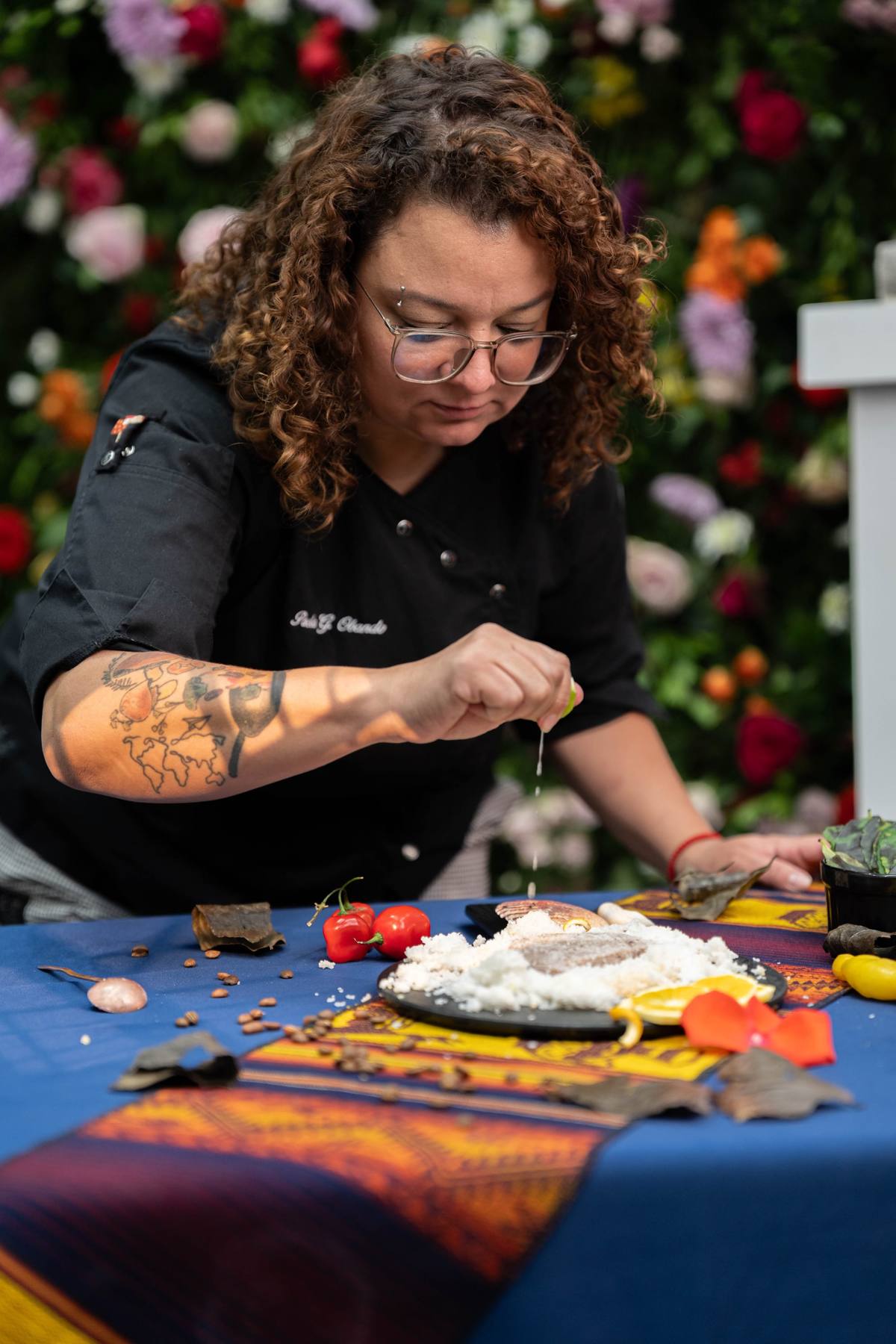
On any given Tuesday at three in the afternoon, I can be standing on a terrace overlooking a spectacular forest on the outskirts of Cuenca, at the place I now call home, coffee in hand, without anyone asking for permission or wondering where I am. That, in theory, is freedom.
It is the same word I might use on a Friday at eleven at night, standing in a kitchen full of labeled containers, my phone lighting up with a last minute order while I calculate how many portions are still missing for Monday. Free, in quotes, because no one is forcing me to be awake at that hour. I chose it. I chose it the day I decided that this project was worth the price.
No one tells you this part when you are building the plan in your head, where everything fits together perfectly: the problem you identified, the solution you have, the market that exists. In your head, entrepreneurship is an equation. Outside of it, it is a constant negotiation between what you are capable of carrying and everything else that keeps landing on your shoulders. And that negotiation almost always costs more than you originally calculated.
Before that terrace and those containers, there were three jobs, each in a different part of the country, that taught me, mostly by showing me what I did not want, the kind of boss I never want to become.
One was in the Galápagos, at a luxury hotel. Another was at a well known hacienda in Cotopaxi. The third was at an eco lodge in the Yunguilla Valley, right here in the area, almost in the backyard of the home I rent now. The landscapes could not have been more different, but underneath them was the same pattern: people who had been given a great deal, a privileged location, an established business, a team with ideas and willingness to contribute, and yet somehow never learned, or never wanted, to give any of that back.
Employees were treated as numbers, as operational burdens, never as investments. There was little room for an idea that had not originated in the head of the person in charge. I would not simply call them bad bosses. The more precise word is arrogance: the habit of confusing having control with being right.
Someone could reasonably tell me that no one forced me to stay in those jobs, that quitting was an option from the very beginning. That is true. But there is a difference between choosing the weight you are capable of carrying and having nowhere to put it down. And in the last of those three jobs, at the eco lodge, the decision was ultimately made for me. I was fired without warning.
Meanwhile, Ecuador has an almost obsessive relationship with the word entrepreneurship. The country’s Total Early Stage Entrepreneurial Activity rate reached 33.37 percent in 2024, the highest in Latin America, making Ecuador the regional leader for the second consecutive year. Nearly half of the country honestly believes that starting a business is easy.
I believed it too, at least in the beginning. In my head, the logic was impeccable: identify the problem, create the solution, find the market, make the numbers work. What that equation never includes is that the proportion of businesses that actually become established, meaning those that survive beyond 42 months, fell from 23.98 percent in 2023 to 13.26 percent in 2024, almost half in a single year. Nor does it account for the fact that 90.6 percent of entrepreneurs in Ecuador start businesses out of necessity rather than choice.
I do not fit neatly into that statistic, and that is probably one of the most honest things I can tell you. I did not become an entrepreneur because I had no work. I could always find something, one job after another. I became an entrepreneur because staying in those jobs was costing me more than they were paying me, even when the number in my bank account suggested otherwise. There is a third kind of necessity that no survey measures yet: the necessity of stopping yourself from shrinking just to fit inside the expectations of someone who does not value you.
Tasting Ecuador did not begin with that name, or that idea, or even that intention. It began in the middle of the pandemic, when my culinary studies were just getting started, under a name that makes me smile now: Bites.
We sold oat bread, almost door to door. Among the products was a chocobanana loaf that is still on the menu today, not because I am sentimental about it, but because it was quite literally the product that helped support my family during one of the most difficult periods we had ever gone through together.
An oat loaf is not a startup, but it was the first yes this path gave me, and I have come to believe that the first yeses count twice.
As I continued studying, eventually completing a diploma in nutrition and earning my chef qualification, Bites became Globol: balanced, nutritious bowls inspired by cuisines from around the world. My attention was still pointed outward. Thailand, the Mediterranean, anywhere but here.
It was while finishing my second degree, in Tourism Management, and after a series of travels I still have not finished telling you about, that my gaze finally turned around. I realized that what I had been searching for in other cuisines had been sitting in my own all along: ancestral techniques, recipes passed down rather than invented, and a country so extraordinarily biodiverse that on a single journey you can move from banana plantations to fields of corn and cassava, as if the landscape itself were changing languages every few kilometers.
That was when Tasting Ecuador was born, not as a way to sell food, but as a way to show an entire country through a plate.
The name changed three times over the course of a few years. The intention underneath it never did: to cook with the certainty that someone on the other side genuinely cares about what they are eating.
The real turning point, the one that actually set everything in motion, was not nearly as elegant as the story might sound in retrospect. I was fired from the eco lodge without warning. A few weeks earlier, without knowing what was coming, I had already brought much of my belongings to Cuenca, almost as if one part of me had anticipated what the other part was still refusing to accept.
I spent a few days thinking about what came next. Going back to Guayaquil, carrying all that physical weight along with the additional weight of the security crisis the city was experiencing at the time, was not an option that felt sustainable. So I decided to start again, this time with a version of Globol built around personalized food service.
During the first week, I got one client. One.
Her name is Wendy, and I believed in it completely. Not because I had any evidence that the business was going to work, but because I did not have many other options and I needed to believe that it could. Over the following weeks, more clients began to arrive. Recently, we reached exactly one year since that first order.
A year is not a guarantee of anything. But it is, without exaggeration, proof that the logic that made sense inside my head could also survive outside of it.
When the numbers finally began to show that this could become something genuinely sustainable, we made the decision that gave everything else a physical shape. After almost five years of living in Guayaquil, we packed up and moved completely.
Amilcar, my boyfriend, and my cats Bruno and Nova climbed into a moving truck with the rest of our life, and that is how we arrived in the city that is now ours. A few months later, we moved out of the place where we had been living with family and got a place of our own. It was there, in that apartment, surrounded by boxes we still had not unpacked, that Tasting Ecuador stopped feeling like an idea with a pretty name and began to feel like a business with a direction.
Since then, we have added cooking classes, beginning with The Same Table, where I demonstrated that traditional cuisine does not have to exclude people who eat differently. We are about to release our first e book, and we started keeping a list of projects that are still waiting to see the light: guided gastronomic routes, tastings, and more.
A year of entrepreneurship in this country is not easy, and none of the statistics above suggest otherwise. But every arrogant boss I have ever had taught me, by contrast, exactly the kind of boss I want to be. I want to see my team as an investment rather than a burden. I want to listen before assuming I am right. I want to understand that leadership is not about always having the final word.
That is, ultimately, the deeper purpose behind Tasting Ecuador. I do not want it to become only a gastronomic emblem, but a professional one too: a place where people can grow without their opportunities depending on whether they happen to be liked by the person in charge.
I do not want this to be average.
And if the price of building something that is not average is a Tuesday afternoon that is free, in quotes, I still think it is a more than fair trade.
So I will keep writing to understand the world, and cooking to interact with it.